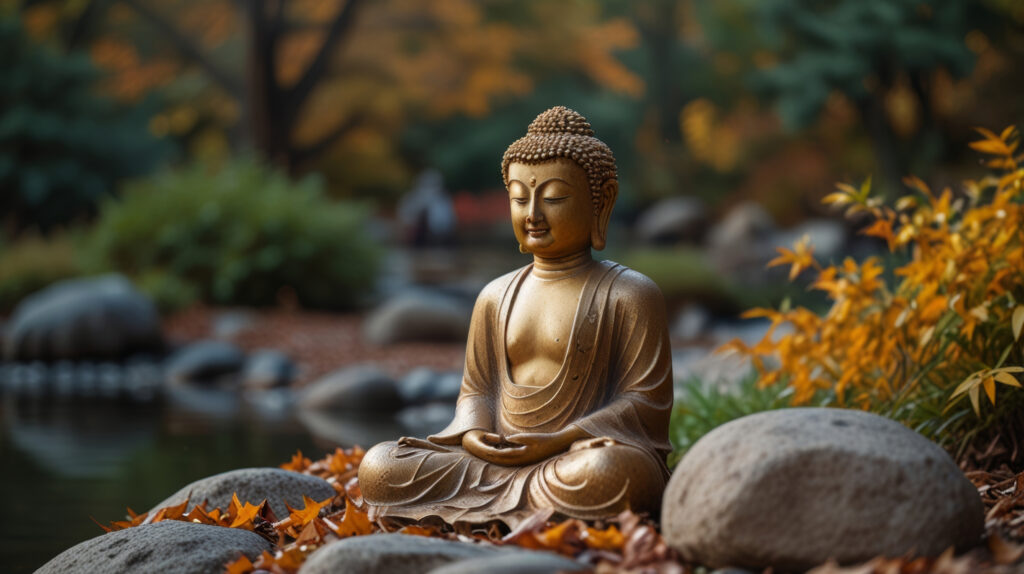
The Eightfold Path: A Guide to Living with Greater Awareness and Inner Peace
Discover an ancient philosophy for cultivating wisdom, practicing compassion, quieting the mind, and bringing greater intention to the way we live.
An Ancient Path for the Modern World
For thousands of years, people have searched for a deeper understanding of happiness, peace, and the nature of human experience. We look for fulfillment in our relationships, our accomplishments, our surroundings, and the experiences that make life meaningful. Yet even when things appear to be going well, the mind can remain restless, caught between memories of the past and concerns about the future.
The Buddhist Eightfold Path offers a different perspective. Rather than suggesting that peace can be found by changing everything around us, it invites us to examine the way we think, speak, act, and relate to the world.
Rooted in the teachings of the Buddha, the Eightfold Path is a practical framework for developing wisdom, ethical conduct, and mental discipline. It is traditionally understood as a path toward freedom from suffering and the patterns of craving and ignorance that sustain it.
The path is not a set of eight isolated rules, nor is it a checklist to complete. Its elements work together, gradually shaping a more thoughtful and compassionate way of living.
Although the Eightfold Path comes from a specific Buddhist tradition, its emphasis on awareness, intention, and personal responsibility offers valuable ideas for anyone seeking to live with greater purpose and clarity.
The Eight Steps of the Eightfold Path
The Eightfold Path is traditionally divided into three interconnected areas: wisdom, ethical conduct, and mental discipline. Each supports the others, creating a balanced approach to personal and spiritual development.
1. Right View: Seeing Clearly
Right View, sometimes translated as Right Understanding, begins with learning to see life more clearly.
Our experiences are often shaped by assumptions, expectations, fears, and deeply ingrained habits. We may interpret a difficult moment as a personal failure or believe that lasting happiness depends on getting everything we want.
Right View encourages us to examine these beliefs and understand the nature of change, the causes of suffering, and the relationship between our choices and their consequences.
It does not require blind acceptance. It invites reflection, observation, and a willingness to recognize things as they are rather than only as we wish them to be.
In everyday life, this might mean recognizing that disappointment is part of being human, that circumstances inevitably change, and that our reactions can sometimes create additional suffering beyond the original difficulty.
Seeing more clearly is the beginning of responding more wisely.
2. Right Intention: Choosing Our Direction
Right Intention, also known as Right Resolve, concerns the motivations behind our thoughts and decisions.
Why do we do what we do? Are our choices guided by kindness or resentment, understanding or judgment, generosity or the need to possess and control?
The Buddhist tradition emphasizes intentions rooted in letting go, goodwill, and compassion rather than craving, ill will, or harmfulness.
This practice begins with small decisions. We might choose to approach a disagreement with curiosity rather than hostility, release the need to win every argument, or consider another person’s perspective before reacting.
Right Intention reminds us that the quality of our lives is influenced not only by what we accomplish, but by the spirit in which we pursue it.
When our intentions become more conscious, our actions have a better chance of reflecting the person we hope to become.
3. Right Speech: The Power of Our Words
Words can encourage, comfort, and bring people closer together. They can also create confusion, damage trust, and leave wounds that remain long after a conversation has ended.
Right Speech asks us to consider how we communicate and what our words create in the lives of others.
In Buddhist teaching, this includes refraining from falsehood, divisive speech, harsh language, and idle or harmful chatter. It encourages honesty, kindness, and communication that serves a constructive purpose.
Practicing Right Speech does not mean avoiding difficult conversations or pretending that everything is fine. Sometimes honesty requires us to express a concern, establish a boundary, or speak up when something is wrong.
The difference lies in how we communicate.
Can we speak truthfully without unnecessary cruelty? Can we listen without preparing an immediate defense? Can we pause before saying something simply because we are angry?
Our words are part of the environment we create around ourselves. Used thoughtfully, they can foster trust, understanding, and connection.
4. Right Action: Living Our Values
Right Action brings our principles into the physical world.
It asks us to consider the effects of our behavior and to live in ways that reduce harm rather than contribute to it. Traditional Buddhist teaching emphasizes refraining from killing, stealing, and sexual misconduct.
At its heart, Right Action is about recognizing that our choices affect other people and the world we share.
We practice it through honesty, respect, responsibility, and consideration for the well-being of others. We consider consent and boundaries in our relationships, treat people fairly, and take responsibility when our actions cause harm.
No one lives perfectly. The purpose is not to become incapable of making mistakes, but to develop the awareness and humility needed to recognize them and make better choices.
Each action offers an opportunity to bring our behavior into closer alignment with our values.
5. Right Livelihood: Aligning Work with Values
Work occupies a significant portion of our lives. It shapes our routines, influences our relationships, and affects the ways in which we contribute to society.
Right Livelihood encourages us to earn a living in ways that do not cause harm.
In the Buddhist tradition, this includes avoiding forms of work that directly contribute to exploitation or suffering. More broadly, it invites us to examine the relationship between our livelihood and our principles.
Does our work respect the dignity of others? Are we honest in our dealings? Do the choices we make in pursuit of success reflect our deeper values?
Not everyone has the freedom to choose ideal working conditions, and livelihood decisions are often shaped by financial and personal responsibilities. This principle does not ask us to ignore those realities. Instead, it encourages us to consider how we can act with greater integrity within the circumstances we have.
Right Livelihood reminds us that success and responsibility need not be opposing ideas.
6. Right Effort: Cultivating What Is Beneficial
Personal growth requires effort, but the Eightfold Path distinguishes wise effort from constant striving.
Right Effort encourages us to prevent unhelpful mental states from arising when possible, release those that have already arisen, cultivate beneficial qualities, and sustain those qualities once they develop.
This is not about forcing ourselves to feel positive all the time. Difficult emotions are part of being human, and trying to suppress them can create additional distress.
Instead, Right Effort asks us to notice what we are cultivating through our habits.
Do we repeatedly feed resentment by replaying an argument? Do we strengthen anxiety by endlessly rehearsing imagined outcomes? Or can we acknowledge difficult feelings while choosing not to let them dictate every response?
We can also deliberately cultivate patience, generosity, kindness, and steadiness.
Small, consistent efforts matter. Like tending a garden, inner development requires attention, time, and a willingness to return to the practice even when progress is gradual.
7. Right Mindfulness: Returning to the Present
Right Mindfulness invites us to pay careful attention to our experience as it unfolds.
Much of our lives can pass without our fully experiencing them. We eat while looking at screens, listen while thinking about something else, and move from one responsibility to the next without noticing how we feel.
Mindfulness interrupts this automatic pattern.
In Buddhist practice, Right Mindfulness involves cultivating clear awareness of the body, feelings, states of mind, and patterns of experience. It is more than simply relaxing or focusing on the breath; it supports a deeper understanding of how our experiences arise and change.
A simple way to begin is to pause and notice what is happening right now.
Feel the support beneath your body. Observe the movement of your breathing. Notice whether your mind feels calm, distracted, or unsettled without immediately judging that experience.
When your attention wanders, gently return.
Over time, this practice can help us recognize habitual reactions and make more conscious choices about how we respond to our thoughts, feelings, and surroundings.
Mindfulness does not remove us from life. It helps us participate in it more fully.
8. Right Concentration: Developing a Steady Mind
While mindfulness involves awareness, Right Concentration refers to developing a stable, collected attention through meditation.
The mind is easily scattered. Thoughts jump from one concern to another, and our attention is often divided among multiple demands. Sustained concentration offers a way to settle this restlessness and develop deeper mental stability.
In Buddhist teaching, Right Concentration is traditionally associated with meditative absorption and the development of profound states of collectedness. It is more specific than simply being able to focus on a task.
For someone beginning a meditation practice, a useful starting point is to choose a simple object of attention, such as the breath. Remain with it as steadily as possible, noticing when attention wanders and gently returning.
There is no need to fight thoughts or criticize yourself for having them. The practice is to develop stability gradually.
As concentration deepens, meditation can create space for greater calm, insight, and understanding. It supports the other elements of the Eightfold Path by helping us see more clearly and respond with greater intention.
The Eightfold Path Is a Practice, Not a Destination
It is tempting to approach personal growth as another achievement to pursue—to believe that if we follow the right steps, we will eventually reach a permanent state in which life becomes easy and the mind never struggles.
The Eightfold Path offers a different understanding.
Its elements are interdependent practices that reinforce one another. Clearer understanding can lead to wiser intentions. Wiser intentions can influence our words and actions. Ethical conduct can support a more settled mind, while meditation can deepen our understanding of ourselves and the world.
Progress is not always linear. We may respond thoughtfully one day and react impatiently the next. We may find meditation effortless at times and challenging at others.
The value lies in returning to the practice.
The path asks us to become more attentive to the choices we make, the habits we strengthen, and the effects we have on others. It is an ongoing process of learning rather than a perfect state we must achieve.
Creating Space for Reflection
Our surroundings can support moments of quiet reflection. A peaceful corner, comfortable seating, soft natural light, and fewer distractions can make it easier to establish a regular meditation practice.
Yet a dedicated meditation room is not necessary. Stillness can be cultivated in a quiet bedroom, in a garden, or in the few minutes before the day begins.
What matters is the intention to pause and become attentive.
At Zen By Design, we believe that thoughtfully designed spaces can help us make room for experiences that enrich our lives. Comfort, simplicity, and an inviting atmosphere can encourage us to slow down and reconnect with what matters.
A peaceful environment does not create inner awareness on its own, but it can serve as a meaningful reminder to return to it.
Bringing the Path into Everyday Life
The Eightfold Path becomes meaningful through the way we live, not simply through our understanding of its principles.
We practice Right View when we question our assumptions. We practice Right Intention when we choose compassion over resentment. We practice Right Speech when we speak honestly and thoughtfully. We practice Right Action when we consider the consequences of our behavior.
We practice Right Livelihood through integrity in our work, Right Effort through the habits we cultivate, Right Mindfulness through our attention to the present, and Right Concentration through the steady discipline of meditation.
These practices can influence how we approach challenges, how we relate to others, and how we experience our own minds.
They also remind us that meaningful change often begins in ordinary moments: a pause before reacting, a more honest conversation, an act of kindness, or a few quiet minutes devoted to awareness.
We do not need to transform our entire lives overnight. We can begin with one choice, one moment, and one practice at a time.
A Path Toward Greater Awareness
The Eightfold Path offers more than advice for living well. Within Buddhism, it is a central framework for developing wisdom, ethical conduct, and mental discipline on the way toward liberation from suffering.
Its teachings invite us to look beyond automatic reactions and habitual desires, to recognize the influence of our choices, and to cultivate a more conscious relationship with ourselves and the world.
The path does not promise a life without difficulty. It offers a way to meet life with greater clarity, compassion, and awareness.
Begin where you are. Pay attention to your intentions. Choose your words with care. Make room for stillness. Let your actions reflect your values.
Sometimes, the first step toward a more awakened life is simply learning to see the life you are already living.